
Understanding Orthopedic Trauma and the Role of Implants in Recovery
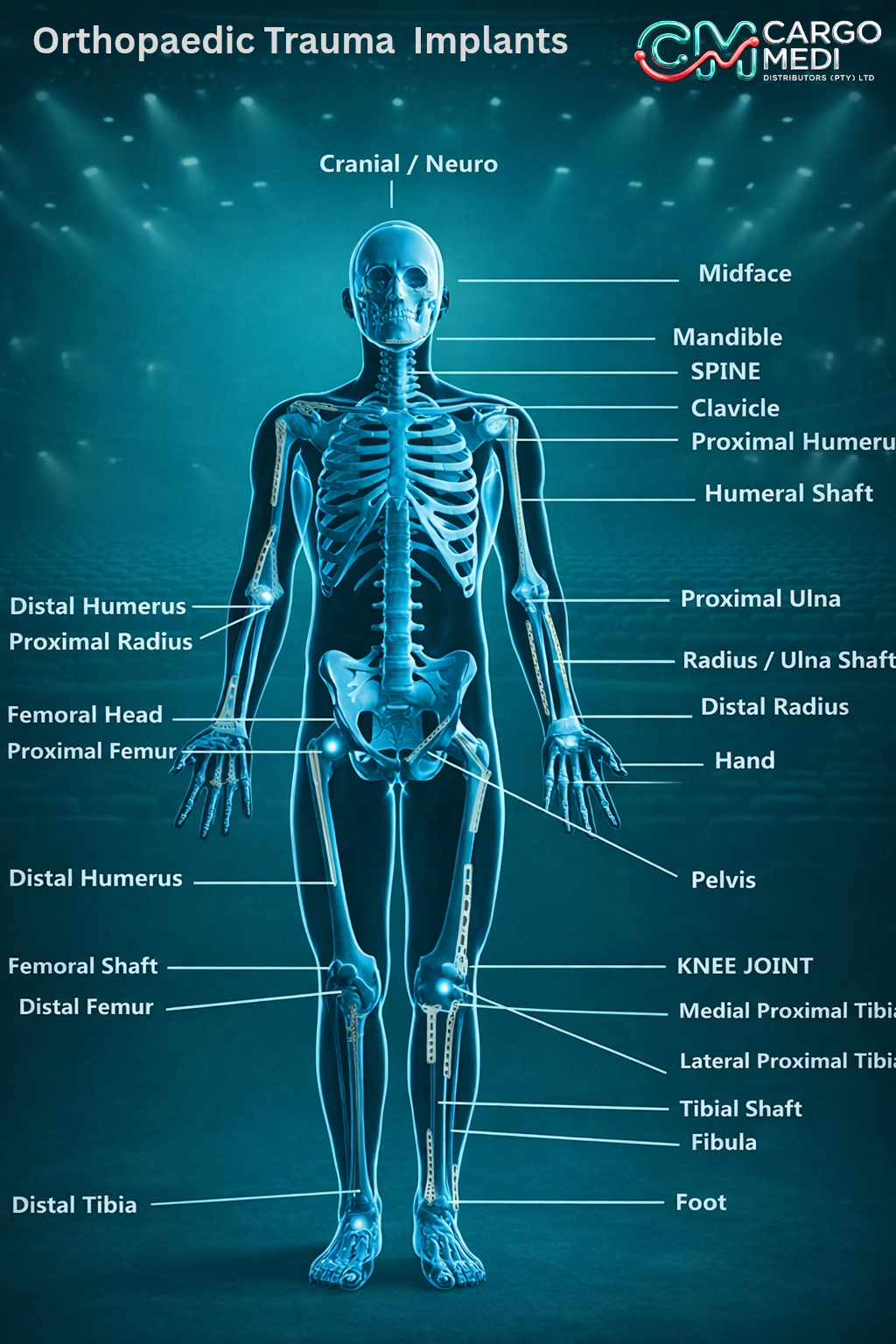
Trauma refers to a physical injury caused by an external force, essentially meaning a wound. In medical terms, it occurs when kinetic energy is transferred to the body, damaging tissues. Orthopedic trauma focuses on injuries to the bones and joints, including fractures, dislocations, and subluxations. These injuries range from minor to life-threatening, and rapid structured assessment using the Advanced Trauma Life Support (ATLS) approach is essential to determine severity and guide treatment decisions. orthopedic-trauma-implants-recovery
The Role of Implants in Orthopedic Trauma
In many cases, surgery is required to restore stability and function. Orthopedic implants are specially designed medical devices used to support or replace damaged bone and joint structures, either temporarily or permanently. The choice of implant depends on factors such as the patient’s body structure, activity level, and the nature of the injury.
Most modern implants are made from durable materials like stainless steel or titanium alloys, chosen for their strength, compatibility with the human body, and resistance to corrosion. Some are combined with specialized polymer surfaces that reduce friction and simulate natural joint movement. Procedures that use plates, screws, rods, or pins to hold fractured bones in the correct position are known as internal fixation. These devices stabilize the injury site, allowing bone healing while helping patients regain mobility sooner.
Infection Prevention Remains Critical
One of the biggest challenges in implant surgery is preventing infection and ensuring proper bonding between the implant and surrounding tissue. Implant-related infections can be severe, sometimes leading to prolonged disability, additional surgeries, or systemic illness.
Factors such as the implant’s surface characteristics, chemical makeup, and ability to resist bacterial attachment all influence infection risk. Successful integration with the patient’s tissue is just as important as the mechanical strength of the device. All medical devices used in these procedures must adhere to strict regulatory standards; you can learn more about these requirements on the SAHPRA official website.
Impact of Antibiotics
Bacteria such as Staphylococcus aureus and Staphylococcus epidermidis are commonly responsible for infections associated with orthopedic implants. The development of antibiotics significantly reduced complications and deaths from these infections. However, the growing problem of antibiotic resistance highlights the need for additional preventive strategies beyond medication alone.
Surface Coatings and Modern Innovations
To further reduce complications, advanced surface coatings are now applied to many implants. These coatings are designed either to release antimicrobial agents over time or to create surfaces that discourage bacterial growth while encouraging bone attachment.
For example, hydroxyapatite coatings promote bone integration and stability, while antibiotic-containing coatings help prevent early bacterial colonization. Different application techniques are used depending on the type of coating to preserve effectiveness and durability.
When Implant Removal Becomes Necessary
Although implants are often intended to remain in place, removal is sometimes required. This is a common planned orthopedic procedure, typically performed when patients experience persistent pain, soft tissue irritation, or when full physical activity is resumed after healing.
In children, implants are usually removed earlier to avoid interference with normal bone growth. Removal surgery, however, is not without risk. Scar tissue, technical difficulty, and potential nerve injury must all be considered before proceeding.
Orthopedic trauma care continues to evolve through improved surgical techniques, better materials, and ongoing research. A clear understanding of implants and their associated challenges is essential for achieving the best possible outcomes for patients recovering from serious musculoskeletal injuries.
Leave a Reply