


Orthopaedic X-ray plates fixation
🦴 Cargo Medi Distributors · Clinical Education

Two Plates.
Two Philosophies.

Neither is universally superior — and that is exactly the point. Understanding when each approach earns its place is what separates good fixation from great outcomes.

Surgeons sometimes treat plating as a single category. It is not. Compression plating and bridge locking plating represent fundamentally different biological philosophies — and the fracture, not the surgeon's preference, should determine which one is applied.

Compression plate fixation X-ray
Philosophy 01

Compression Plating

Compression plating works by generating interfragmentary pressure across a simple fracture. The goal: anatomic reduction and direct primary bone healing — no visible callus, cortical remodelling across the fracture line.

This works when:
  • The fracture pattern allows anatomic reduction
  • Soft-tissue stripping will not compromise biology
  • Bone quality supports stable compression
VS
Bridge locking plate surgical procedure
Philosophy 02

Bridge (Locking) Plating

Bridge locking plating takes the opposite approach — it deliberately avoids the fracture zone. The plate acts as an internal external fixator, providing fixed-angle support without compression. It invites indirect healing and callus formation.

This earns its place when:
  • Comminution or bone loss makes anatomic reduction impossible
  • Biology preservation is the primary priority
  • Fixed-angle support in osteoporotic bone is needed
Surgical team in operating room orthopaedic fixation
The Biology Behind It

Direct primary bone healing — the goal of compression — requires absolute stability at the fracture site. Any interfragmentary motion disrupts the haversian remodelling process and prevents cortex-to-cortex union without callus.

Indirect healing — invited by bridge plating — relies on controlled micromotion. The periosteal and endosteal callus that forms is nature's response to mechanical stimulus. Eliminating that motion with compression in a comminuted pattern doesn't produce better healing. It produces no healing.

The biological rules do not bend to implant preference. The fracture tells you which philosophy to apply.
The Critical Error

The Mistake to Avoid

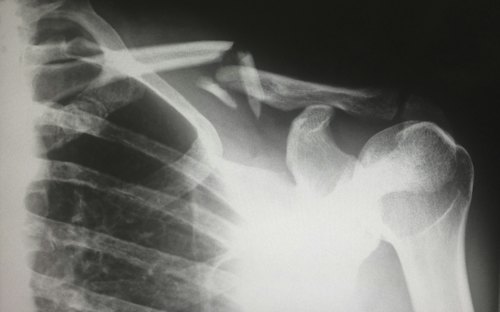
The mistake is not choosing one approach over the other. It is misapplying the choice to the wrong fracture — or failing to achieve the stability the chosen philosophy demands.

Applying compression to a comminuted fracture — interfragmentary pressure cannot be achieved across multiple fragments, biological disruption occurs without the intended mechanical benefit.

Failing to achieve rigid fixation when direct healing is the goal — inadequate compression or unstable construct allows micromotion that prevents primary bone healing and risks non-union.

"The plate is not the decision. Understanding the biology behind the fixation is."

At Cargo Medi Distributors we provide orthopaedic implants that support the full spectrum of fixation philosophies — because the right plate depends on the right decision.

Further Reading